|
Cassata is the most celebrated Sicilian dessert and it is the classic Sicilian Easter Cake.
Easter comes around the time of the vernal equinox, which occurs on March 20/21; it
indicates the coming of spring in the Northern Hemisphere. It coincides with the Roman pagan
celebration of Ceres, Demeter for the Greeks, the goddess of fertility who blesses and helps to
produce the fruits of the earth; cakes were offered for the occasion to the goddess; they were made
with an outer crust of flour and honey and stuffed with sweetened ricotta.
To celebrate weddings, this cake was baked and wrapped in laurel leaves.
.JPG "Torta di Ricotta")
Many
scholars claim the cassata was introduced in Sicily by the Arabs in the ninth century,
deriving the name cassata from the Arabic quasat: on this subject, it is very hard to
come to a sure and positive conclusion and any theory could be as valid as any other
speculation.
In
fact the Arabs contributed to the Sicilian cooking, including
many desserts; however their influence has been greatly overstated.
They introduced sugar to
Sicily, making it possible to transform the almond paste,
originally sweetened with honey, into marzipan, the Pasta Reale. They introduced many new spices
from the Orient, gave Saracen names to some Sicilian dishes, made contributions to agriculture by
creating small farms individually owned and introduced a modern irrigation
system.
Going back to cassata…
It is more reasonable to conclude that the word cassata does not derive from the Arabic word
“qas’at”, meaning a small box or incidentally it could have derived from the Latin word
“capsa” which means case, chest or box which in vulgar Latin morphed into cassa, hence the word cassata; or
else and more probable, since the ricotta cheese is the main ingredient in the cassata, this word
could derive from “caseus” which means cheese.
Furthermore, because Sicilian cooks employed by the elites of the Roman high society living in
Sicily and in Rome, prepared a type of bread stuffed with honey, fresh cheese and covered with
fresh fruits to offer to Ceres, the goddess of fertility around what is now, Easter time, and being
Latin the language used by the Sicilian cooks, the word “caseus” was distorted in “cacio,
casia and cassata”.
This kind of cake goes back before the Romans Empire: Sicilian cooks were making a similar pastry
in Magna Grecia, for the Greeks living in
Sicily, to offer to their goddess Demeter to gain her
blessings to the land and to bring new life into their
families.
The truth is that cassata is as Sicilian as the apple pie is American.
Later candied citron was added to the filling along with chocolate pieces when it was introduced
from America. This type of cassata is now known as “Cassata al Forno” or baked
cassata.
The "Classic Cassata Siciliana" as it is known today was introduced in the 19th century
by Signor Guli’, a famous “pasticciere” and owner of the homonymous pastry shop in Corso Vittorio
Emanuele in Palermo. One of the members of the prominent Florio family asked him to make some
exceptional cakes that would not turn acrid so they could be shipped to their friends as a
different, sweet and delicious gift: Mr. Guli’ successfully made what is today considered the
epitome of the Sicilian dessert as well as the cake to celebrate Easter and holydays, not only on
Sicilian tables.
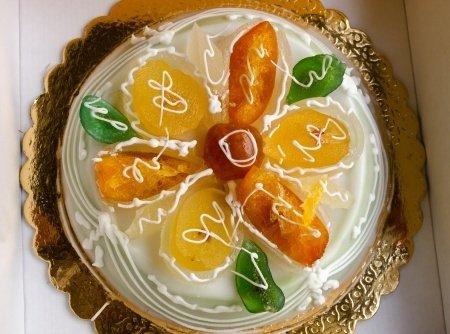
The main ingredients of the original and classic cassata are sponge cake and a filling made with
ricotta sweetened with a small amount of sugar or honey, fragrant with cinnamon, with a hint of
vanilla and enriched with diced citron and orange. The outside is covered with a light layer of
glaze, prepared with confectionary sugar and lemon juice to counterbalance the sweetness of the
cake and as a final touch it is decorated with multicolored candied whole and sliced
fruits.
Special round molds are used, with the side 2 ½ inches high, inclined to the outside about 15
degrees, to give that particular and characteristic shape.
After the cassata is made, it must be stored for a few hours or overnight, to allow the aromas
of the ricotta to blend with the sponge, and then it can be completed and decorated.
There are many myths about the Cassata Siciliana. It is described in many recipes as a wedding
cake, made with whipped cream, and with emphasis to the fact that it is very rich, and offensively
sweet. The truth is that a well-made cassata is a harmonious blend of different tastes and aromas,
with a balanced freshness of the lemony icing and the delicate savor of ricotta
cream.
In
this site you will find four different recipes of cassata:
Cassata Siciliana Classic
Style.
Baked Cassata -Torta di
Ricotta
Homemade- Layer Cake Cassata.
Trifle Cassata- Zuppa di Cassata
|

.jpg)