Figs
Cookies
Buccellati-Bucciddati-
Cucciddati-Cacateddi
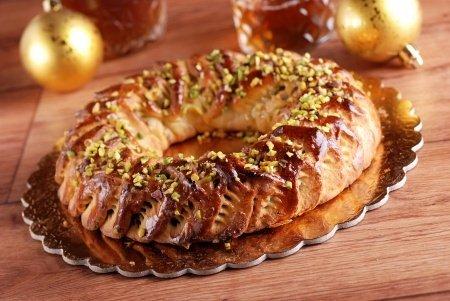
All over the Island the classic Sicilian dessert called bucciddatu, has been a favorite for centuries and prepared
in for the Christmas holidays.
It may require some doing to assemble all the ingredients, and some patience in the preparation of the filling
which demands efforts and time. The immeasurability of the reward happens the moment you bake those
savory bucciddati, when
their smell will fill every corner of your home and the nearby neighborhood and a Christmas spirit will fill your
soul. Then when you, your family and friends savor these delicious cakes, that are rich with the taste of dried
fruits, nuts, pungent and aromatic flavors, enclosed in a crumbly and tender crust, you will agree that the end
result is worth all the work and efforts.
This round fig cake, buccellato
in Italian or bucciddatu
in Sicilians is so called because before baking it, in order to
allow the steam to escape, each fig cake is riddled with the prongs of a fork: in Sicilian the archaic name for
fork is buccetta, thus the
name bucciddatu
a mutation frombuccettatu. In
time the letter “B” in bucciddatu morphed into a “C” and so some call these cakes cucciddati.
Like other Sicilian specialties, the fundamental nature of these bucciddati is the distinction of savors and
bouquet: in fact the sweet fruity stuffing is opposed to the flavor of the pungent and spicy black peppercorn, the
sugary crust is lightly salted, the distinctive taste of cloves so different from the sweet taste and scent of
cinnamon and vanilla, and the tart of the orange peels is in contrast with the subtle fragrance of the
almonds.
The most popular shapes of the bucciddati are as a ciambella, a
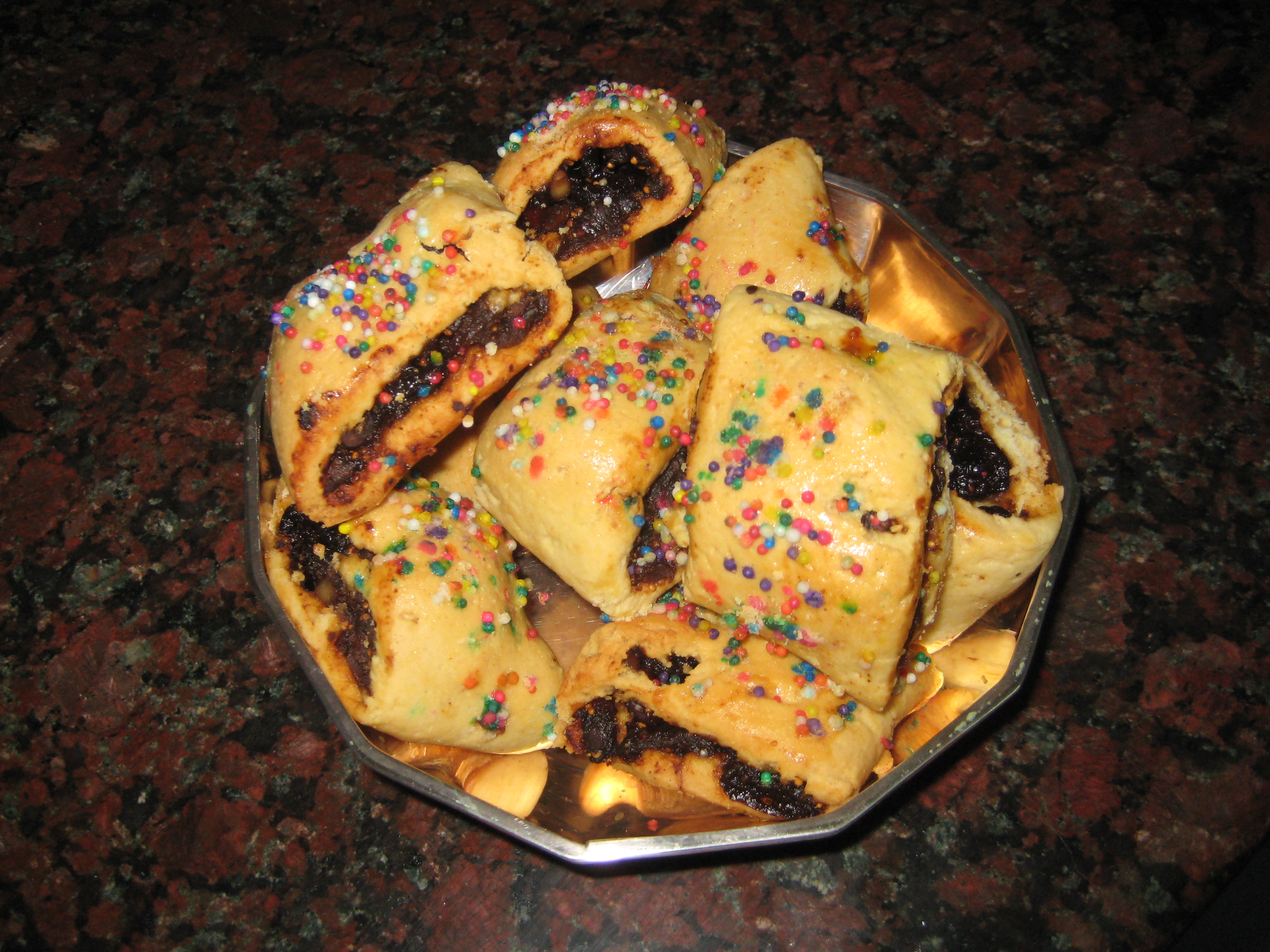
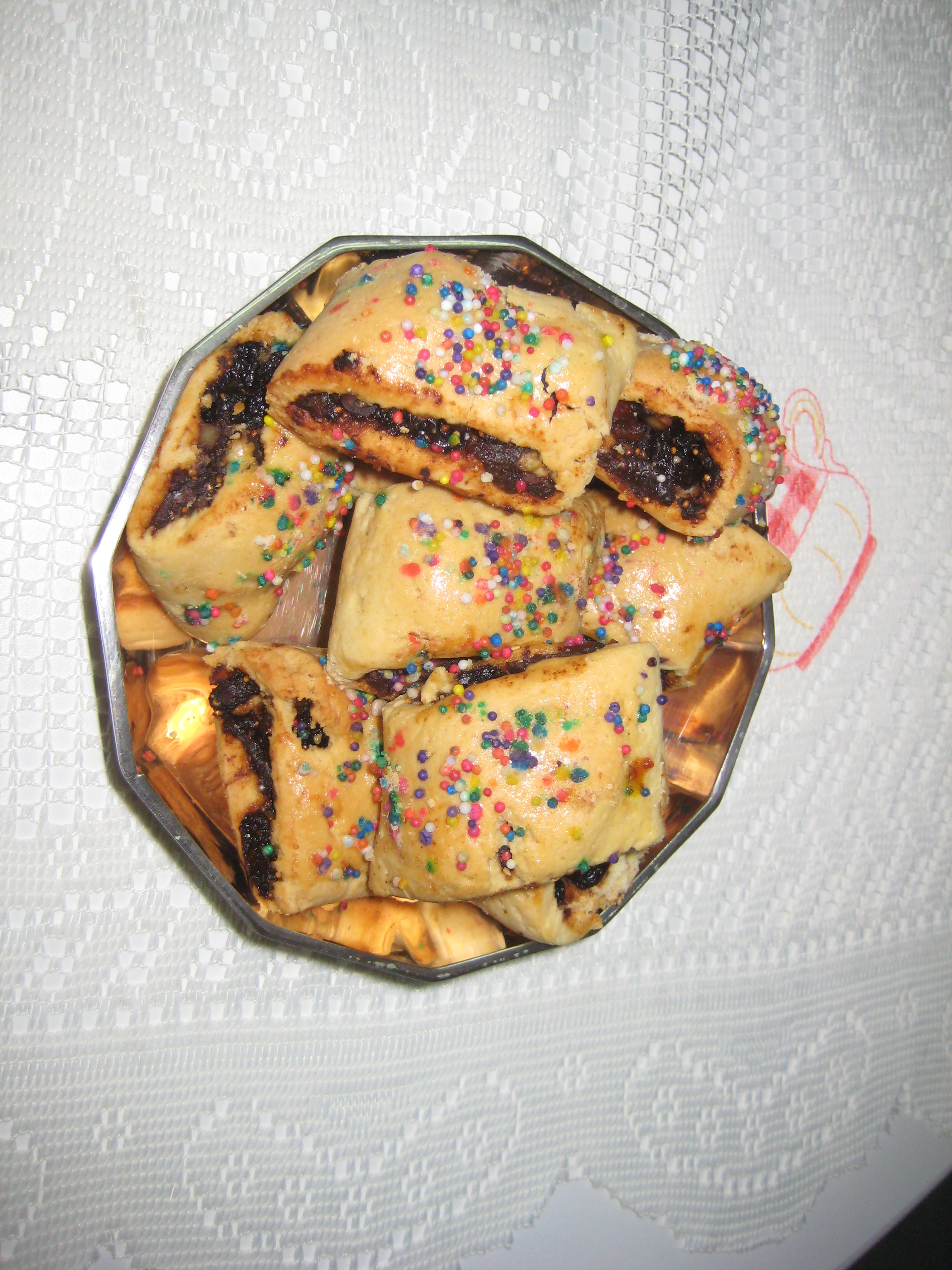
ring-shaped cake or as a cookie in a rhombus shape, about 1½ inch by 2 inches.
In some parts of Sicily those fig cookies are called cucciddati or cacateddi.
INGREDIENTS
For the
Filling
-
peels of 2
fresh oranges
-
1
lb. of dry figs stemmed and cut into 6 to 8 pieces
-
½
lb. raisins
-
¼
cup of bitter cocoa or equivalent bitter or semisweet chocolate
-
1
teaspoon ground black pepper
-
1
teaspoon of ground cinnamon
-
¼
teaspoon of ground cloves
-
1
cup of sugar
-
red wine to
cover ( over a pint)
-
1
cup coarsely chopped almonds (use a blender to chop)
-
1
teaspoons vanilla
For the
Crust
-
1
cup of milk
-
1
½ cups of lard or vegetable shortening, or 3 sticks of unsalted butter
-
1
cup of sugar
-
2
tablespoons of honey
-
8
cups of all purpose flour
-
8
level teaspoons of baking powder
-
½
teaspoon of salt
-
cold water if
needed
For
Garnish
-
Egg wash, (beat
2 eggs with 3 tablespoons of water)
-
Small
confection of Nonpareils (tiny multicolored sugar balls)
PREPARATION
The
Filling
To ready the orange peels for the filling, rinse with cold water, dry and bake at 375 degrees for 15 minutes. When
cooled, cut them with scissors into very thin strips to resemble “angel’s hair”-capelli
d’angelo.
In a large pot without a cover, at a medium heat place the figs, raisins, almonds, cocoa, black pepper, cinnamon,
cloves, 1 cup of sugar, orange peels and the red wine to cover the ingredients. Simmer at a very low heat, stirring
often. Do not cover!
After 20 minutes stir in the vanilla and continue simmering until the wine is absorbed into the filling. It takes
about 45 minutes. Mixture should be chunky.
Transfer into a large bowl to cool, cover tightly with plastic wrap and store in the refrigerator, up to 3 days
until ready to use.
The Crust
Place in a pot the milk, sugar, honey and lard, shortening or butter and at a low heat warm the mixture, until the
fat is melted. Cool it off.
Use a mixer or on a flat surface, mound the flour, mix in the baking powder and form a well. Add the liquid mixture
to the dry ingredients and using your hands, start to blend the flour from the inside of the well and keep
incorporating the flour into theliquid mixture. Mix thoroughly and bring the dough together to form a ball. If the
dough is to dry, add a few drops of water to moisten.
Fold and press with the palm of your hands; if dough is sticky, add some more flour. Do not over
mix.
When dough forms into a single mass, cover with a kitchen rag or plastic wrap, set aside, and refrigerate for at
least 30 minutes.
Discard scraps and wash your hands and working surface.
The Bucciddatu
Prepare some cookie sheets by lightly greasing and pre-heat oven to 375 degrees.
Retrieve dough from refrigerator, divide dough in 8 pieces (cut into 4 pieces and each piece in half); work one
piece at a time, leaving remaining dough covered with a kitchen rag or plastic wrap.
Dust working surface with flour and place one piece of dough in center; fold and press with the palm of your hands
a few times and roll it out into a cylinder shape (like a sausage) 15 inches in length. Than with the help of a
rolling pin, flatten the pastry dough into about a 15 inch rectangle, 4 to 5 inches wide and about 1/8 of an inch
thick.
Spoon out and place some filling in the center of the strip, leaving clear 1 inch on each side. Lift one side over
the top of the filling, moisten the other side with water and roll over to completely enclose the fig mixture; if
it opens, pinch dough to seal the roll.
Gently roll the bucceddatu back and forth to round it and place the sealed part on the bottom.
If pastry dough is too fragile spread it on parchment paper, so it will be easer to handle.
The Cookies
Prepare the bucciddatu roll as per above instructions. Make sure that the seam is located at the bottom of the
roll, cut on a 45 degree angle into 1 ½ inch wide pieces and place on the cookie sheet, at 2 inches
apart.
Make a series of riddles with a fork, “the buccetta”, on
the top of each cookie to allow the vapor to escape.
Bake at 375 degrees for 20 minutes; than brush the buccellati with egg wash and to give them a festive look,
sprinkle on top some of the nonpareil candies (tiny multicolored sugar balls). Bake for an additional 15 minutes or
until lightly golden.
Transfer to a cooling rack
The Cake
To make the classic round bucciddatu you need to shape one of the stuffed strips into a ring
cake.
After the bucceddatu is rolled so that the sealed part is placed at the bottom, shape into a round and seal the
ends. With the help of a spatula transfer the cake onto a cookie sheet and using a sharp knife, make little cuts on
the outside of the ring at one inch intervals.
Make a series of riddles with the prongs of a fork at half inch intervals on top of the buccellato
to allow the vapor to escape.
Bake at 375 degrees for 20 minutes; than brush the buccellati with egg wash and to give them a festive look,
sprinkle on top some of the nonpareil candies (tiny multicolored sugar balls). Bake for additional an 15 minutes or
until lightly golden.
Transfer to a cooling rack
In Palermo the baked buccellati also are garnished using apricot marmalade diluted with a little water and melted
over a low flame, so it can be used to glaze. The top and side of the buccellato is washed with the apricot glaze,
sprinkled with roasted and coarsely chopped pistachio nuts and decorated with candied fruits.
.jpg "Buccellato with wine")
| 
.jpg)