Wheat of Saint Lucy
(“Cuccia di Grano”)
Saint
Lucy was born in the forth century, in Syracuse
,
Sicily
and died
at the time of the prosecution of the Roman Emperor Diocletian. She was reported to the Roman governor as a
Christian by the young suitor she had refused, having promised her virginity to God. She was tortured, her eyes
pulled out then slaughtered. Saint Lucy’s Day is celebrated on December 13, the anniversary of her death. She is
the patron Saint of Syracuse
.
Saint
Lucy is implored to help in all eyes sicknesses; she is celebrated all over Sicily
, in
many cities in the Italian
Peninsula
and
faraway.
In Northern
Italy, Saint
Lucy is also popular among the very young because as the legend goes, she brings gifts to good children and
charcoal to the fresh one.
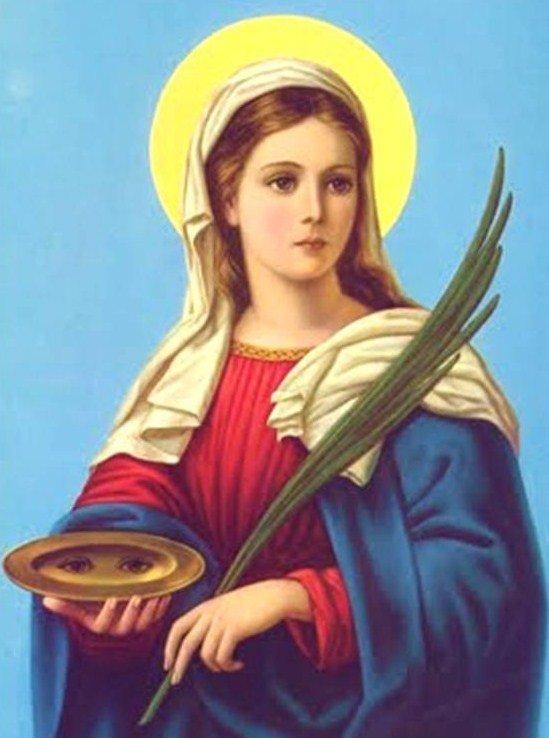
December 13, the shortest day and the longest night of the year, coincide with the Winter solstice,
when the sun is at the greatest distance from the earth. In the old times, this event was ritualized in the
Scandinavia
Peninsula
,
in Denmark
and
in Finland
by
burning night fires outdoor.
The longest night was illuminated to wish for longer and prosperous days ahead with abundant crops and good
fishing. It was a time for celebration, for dancing and drinking. Food was prepared and pigs were roasted on the
fire.
A story goes that in this period, around the year 1000, occurred a severe famine and Saint Lucy saved the
population by bringing in a ship full of food to them. This explains why the Great King Canute, a Viking warrior
who ruled England, Denmark, Norway, Sweden, and part of Finland, declared December 13th Saint Lucy’s Day and a day
to celebrate fire and light of the traditional Christmas season. In those Nordic countries Saint Lucy’s Day is
honored with prayers, family meetings, banquets; young girls dressed in white gowns with red scarves and young boys
carrying lighted candles paraded singing Yuletide hymns. They would go from house to house offering warm wine, tea
or coffee and saffron’s buns or ginger bread cookies, especially made for this saint’s day.
The city
of Syracuse
honors
Saint Lucy with a week of festivities, including fireworks, sweets and the vow not to eat pasta or bread. A
similar mythical story is that the city was effected by a harsh famine and the Saint rescued the population when
two ships loaded with wheat miraculously delivered it to Syracuse
.
.jpg "Wheat")
People
were so eager to eat that they boiled the wheat and ate it simply dressed with olive oil. This was the first
cuccia ever made.
Later, in Syracuse
the
chickpeas and fava beans were added, and the sweet cuccia was made by adding cooked wine or honey.
Santa Lucia is known to protect the eyes and for this reason, she is honored in every town in
Sicily . Many and
different dishes are made and the rule “no pasta, no bread” is observed. The cuccia is made in all the towns, every
town makes it in their own way, and every family has their own version.
In my paternal home Saint Lucy was a feast rigorously observed: no bread, no pasta, and no meat! My mother and my
aunts prepared a large variety of sweets and cooked many special dishes to fill in a traditional menu followed by
my family while my parents were alive and we had no dietary restriction.
The morning started with “cuccia al cioccolatte”, wheat and chocolate followed with “allessi vugghiuti”, boiled dry
chestnuts with dry figs and carobs.
Lunch consisted of a delicious and memorable dish: rice with beans and dry chestnuts and boiled potatoes instead of
bread.
Afternoon snack comprised of boiled eggs and potatoes.
At dinner a myriad of vegetables, rice balls, fish salad and stewed potatoes.
At every meal cuccia was served with ricotta, with chocolate, with honey and nougat with sesame seeds or almonds,
pine nuts cookies and more sweets.
At every meal, my mother or Aunt Francesca made us recite a prayer to Saint Lucy to protect our eyes; it was done
swiftly so we could enjoy the delicacies on the table.
Cuccia
(Cooked Wheat)
Ingredients:
· 2 lb.
of skinless wheat
· 4 oz.
unsalted butter
· Pinch
of salt
· 1 bay
leaf
.jpg "Cooked Wheat - Grano")
Preparation
Place a small amount of wheat in a large and shallow pan and inspect it, a little at a time, for any small stones
or foreign particles.
Soak the wheat overnight, changing the water and rinsing it a few times.
In a large pot place the wheat, butter, bay leaf, and salt, add enough water to cover it then add an additional 2
quarts of water. Bring it to a boil over a medium heat, lower flame and simmer until it is cooked, about 1 hour and
15 minutes. Stir it occasionally; keep a small pot with hot water on the side to add in case the wheat absorbs all
the water before it is cooked.
When wheat is cooked, if the water has not been absorbed, drain the excess water, remove bay leaf, cool it, cover
and refrigerate.
This is the Cuccia.
It is advisable to cook the wheat a day ahead. Because a skin forms, before using it, scrape the dry wheat on
top.
Cuccia with Ricotta
(“Cuccia alla Ricotta”)
Serves
4 to 5
Ingredients:
· 1 cup
of ricotta
· 4
tablespoons of sugar
· ½ cup
of assorted candied fruits
· ¼ cup
chopped chocolate or chips
· 2 drops
vanilla
· zest of
½ orange
· 3 cups
of Cuccia
· 1
teaspoon of sugar mixed with a pinch of cinnamon powder
Preparation
.jpg "Candied fruits")
Combine
the ricotta, sugar, half of the assorted fruits, chocolate, zest of orange and the vanilla, blend the
ingredients thoroughly: add the cuccia and keep mixing until smooth and creamy. If it is too dry add some milk
and adjust the sweetness by adding sugar to your taste.
Place in a serving dish, garnish with remaining candied fruits and a dusting of sugar and cinnamon.
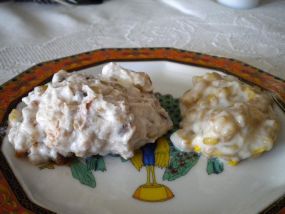
Cuccia with Chocolate
(“Cuccia al Cioccolato”)
Serves
6 to 8
Ingredients:
· ½ cup
of bitter cocoa for baking or dark chocolate
· ¾ cup
of sugar
· tip of
a teaspoon of cinnamon
· 1 ½
cups of water
· 1 quart
of milk
· 3 cups
of Cuccia
· 5 large
eggs
· 2 drops
vanilla
· zest of
½ orange
Preparation
In a 4 quart saucepan combine the cocoa or dark chocolate, sugar and cinnamon; add ½ cup of water, whisk it until
mixture is smooth then add remaining water. Cook over a medium heat, stirring continuously. When it starts to
bubble turn heat very low and simmer for 10 minutes, stirring occasionally.
Increase heat to a medium flame and add milk. Bring it near a boil, remove and reserve 1 cup of the warm
milk-chocolate.
.jpg "Chocolate cream")
Mix the
cuccia with the milk-chocolate and keep stirring.
Beat the eggs in a bowl, add the cup of the warm milk-chocolate mixture reserved, vanilla, orange zest and set
aside.
Keep mixing the cuccia until it is smooth and creamy. If it becomes to dry add some milk. Taste it for sugar and
add to your preference.
When the cuccia starts to bubble, turn the flame to low, blend in the eggs, stirring continuously cook for an
additional 3 minutes.
The cuccia al cioccolatte is made!
Pour in a bowl, cover with buttered wax paper and refrigerate.
Serve at room temperature or cold.
Cuccia with Honey
(“Cuccia al Miele”)
Serves
4 to 5
Ingredients:
· 2 cups
of Cuccia
· 1 cup
of honey
Preparation
In a small saucepan, over a medium heat, combine 1 cup of water and the cuccia. Bring to a boil, stirring
occasionally.
Pour in a serving bowl and serve hot or at room temperature with the honey on the side, so that each table
companion can add it to cuccia to his or her own taste.
Cuccia with Chickpeas
(“Cuccia con Ceci”)
Serves
4 to 5
Ingredients:
· 2 cups
of Cuccia
· 1 can
of chickpeas, drained and rinsed
Preparation
In a small saucepan, over a medium heat, combine 1 cup of water and the cuccia. Bring to a boil, stirring
occasionally.
When it starts to bubble lower heat, add chickpeas and simmer for 3 minutes.
Serve hot or at room temperature with olive oil and a black pepper mill on the side.
.jpg "Chickpeas")
Note:
In
Syracuse
boiled
fava beans are added with the chickpeas.
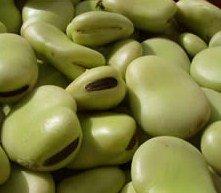
| 
.jpg)